Menstrual Health and Equity
Ensuring access to choose, accurate information, and bodily autonomy.
Protection and Gender Justice
Dismantling systemic violence and strengthening community-based protection.
Education Pathways and Equity
Supporting girls to stay in school and access lifelong leadership opportunities.
Leadership and Civic Advocacy
Amplifying girls' voices so they can lead social and political change.
Climate-Resilient WASH
Advancing climate-smart water systems to ensure schools remain safe and functional.
Global Goals and Partnerships
Aligning grassroots impact with the SDGs -specifically SDGs 4, 5, and 6 -to drive systemic, collaborative change.
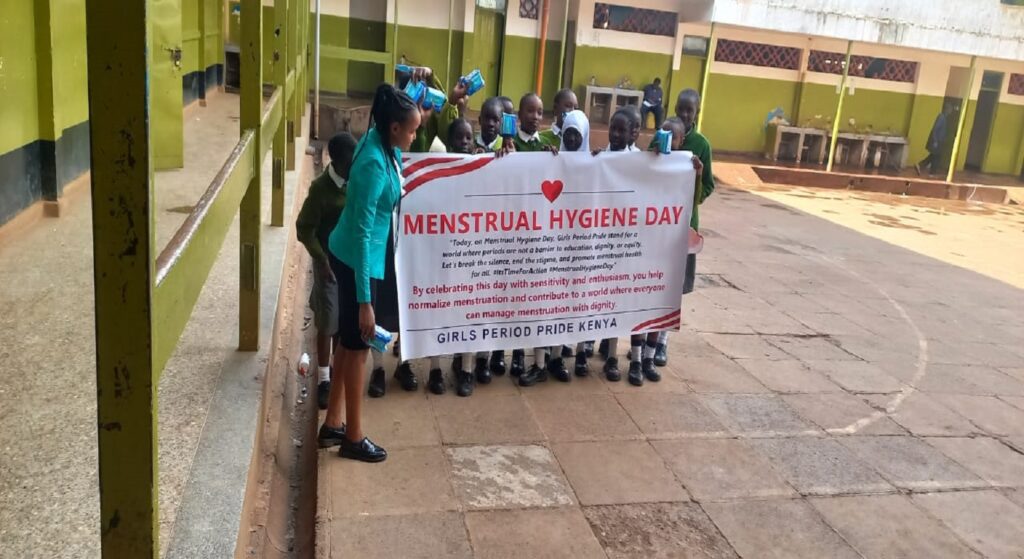
Period Dignity Schools Program
This program ensures every girl has the products, education, and peer support needed to end the cycle of shame.
• Informed Choice: We provide a variety of options, including disposable pads, reusable materials, and menstrual cups, with full training on safe use.
• Peer Champions: We establish school-based Menstrual Health Clubs led by trained youth advocates.
• Data-Driven: We track anonymized attendance data to measure the direct reduction in period-related absenteeism.
• Expected Outcome: Elimination of period poverty and a measurable increase in school retention in our target schools.
• Informed Choice: We provide a variety of options, including disposable pads, reusable materials, and menstrual cups, with full training on safe use.
• Peer Champions: We establish school-based Menstrual Health Clubs led by trained youth advocates.
• Data-Driven: We track anonymized attendance data to measure the direct reduction in period-related absenteeism.
• Expected Outcome: Elimination of period poverty and a measurable increase in school retention in our target schools.
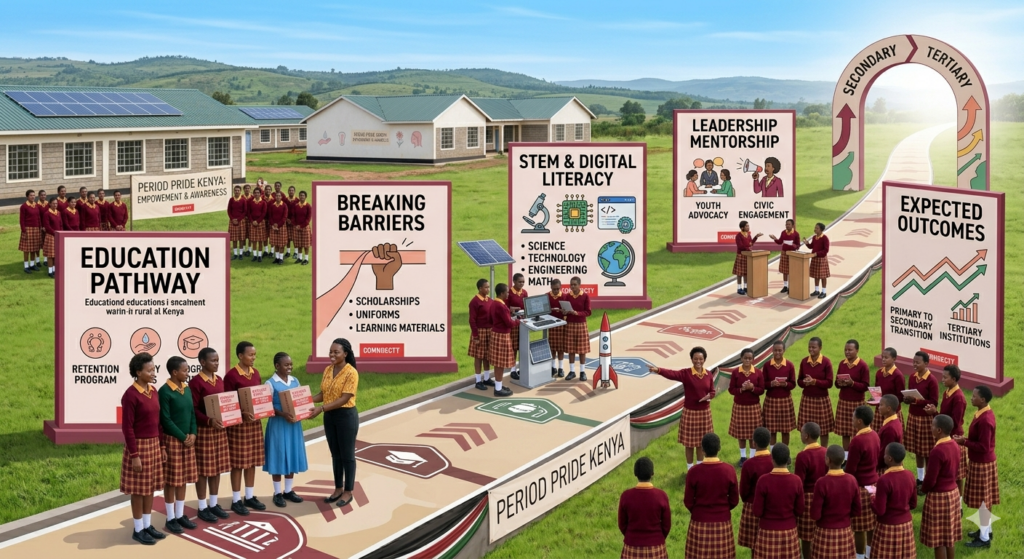
Education Pathway and Retention Program
We equip girls with the mentorship and "Future-Ready" skills needed to transition from students to leaders.
• Breaking Barriers: Providing scholarships, uniforms, and learning materials to eliminate socio-economic hurdles.
• STEM and Digital Literacy: Exposing girls to Science, Technology, Engineering, and Math to ensure they are competitive in the global economy.
• Leadership Mentorship: Cultivating youth advocacy networks that focus on civic engagement.
• Expected Outcome: Increased transition rates from primary to secondary and tertiary institutions for vulnerable girls.
• Breaking Barriers: Providing scholarships, uniforms, and learning materials to eliminate socio-economic hurdles.
• STEM and Digital Literacy: Exposing girls to Science, Technology, Engineering, and Math to ensure they are competitive in the global economy.
• Leadership Mentorship: Cultivating youth advocacy networks that focus on civic engagement.
• Expected Outcome: Increased transition rates from primary to secondary and tertiary institutions for vulnerable girls.
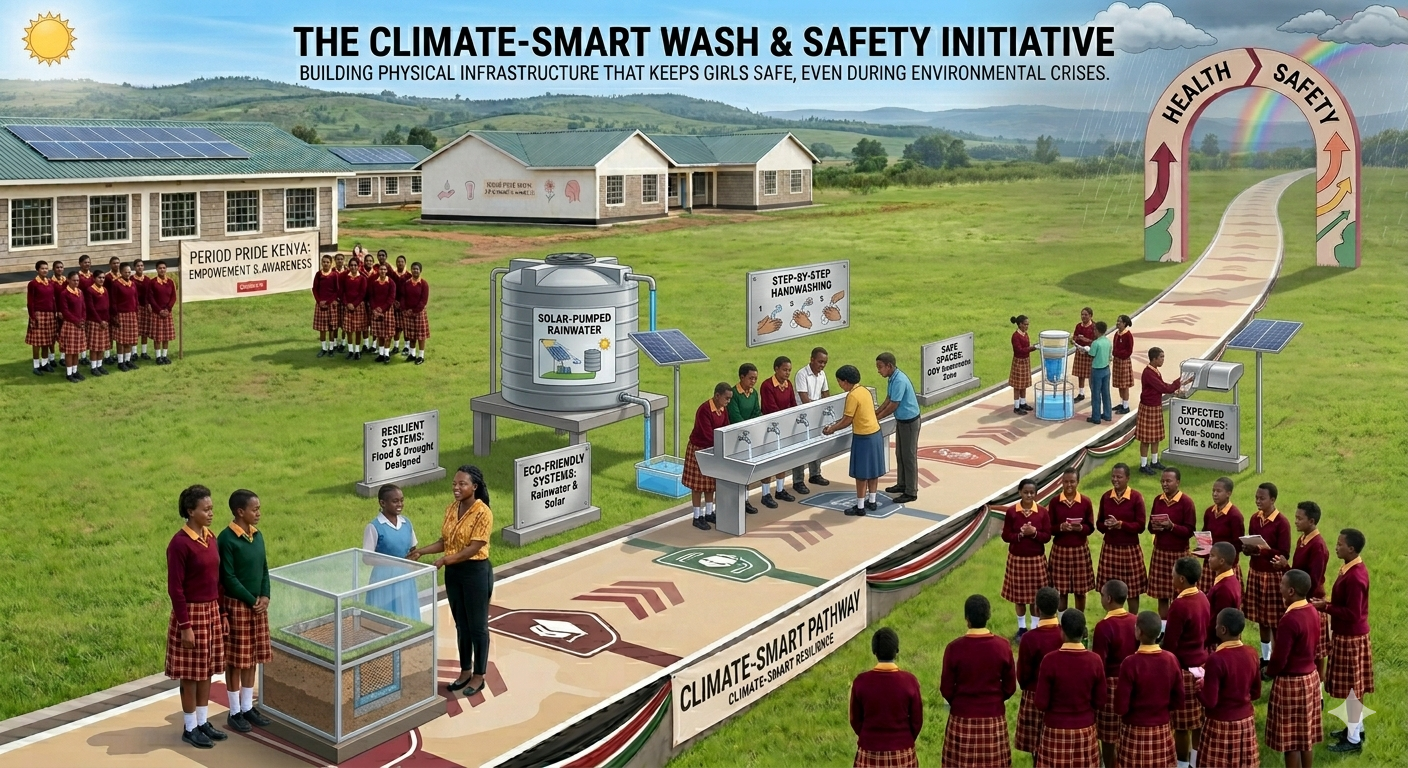
The Climate-Smart WASH and Safety Initiative
We build the physical infrastructure that keeps girls safe, even during environmental crises.
• Resilient Infrastructure: Constructing girl-friendly WASH facilities designed to withstand floods and droughts.
• Eco-Friendly Systems: Implementing rainwater harvesting and solar-powered pumps to ensure water access year-round.
• Safe Spaces: Establishing school-based GBV awareness programs and robust child protection mechanisms.
• Expected Outcome: Schools remain functional during water scarcity, ensuring health and safety are never compromised.
• Resilient Infrastructure: Constructing girl-friendly WASH facilities designed to withstand floods and droughts.
• Eco-Friendly Systems: Implementing rainwater harvesting and solar-powered pumps to ensure water access year-round.
• Safe Spaces: Establishing school-based GBV awareness programs and robust child protection mechanisms.
• Expected Outcome: Schools remain functional during water scarcity, ensuring health and safety are never compromised.